I build lean, efficient growth engines from early traction to real scale.
Hands-on brand architect meets performance marketing leader. Creative strategy and data-driven operations, built on an AI-native operating model.




Three growth engines, from near zero to scale.
The situation I inherited, the system I built, the number it produced.
Built the growth function from the ground up
Founding marketing hire at $250K ARR. Owned brand, product, messaging, experience, and growth channels as one loop, then rebuilt that loop on an AI-native operating model.
Launched a marketplace to $451M, profitable in under three years.
A new gated marketplace against Etsy, which owned the category. Supply and demand had to be built at the same time, in eight countries, behind a quality bar that disqualified most applicants.
A $13M budget across paid media, social, SEO, influencer, email, affiliate, and PR, plus go-to-market with product and seller onboarding.
A weekend seller-matching tool for 100K approved-but-unlaunched sellers became a paid service and $100M+ in annual GMV.
Read the full case → (coming soon)Founded an advisory practice and scaled it 3 to 55.
Legacy enterprise brands were losing to digitally native competitors – people, systems, tools and technologies all played a role.
Launching and scaling the practice from day one – the playbook, market positioning, hiring, and all client engagments/deliverables.
Most “AI-first” teams bolt tools onto an old operating model. I rebuild the model.
Systems, not channels
Positioning, creative, media, and incrementality are one engine. I diagnose which part is broken before spending against it.
AI-native, not AI-curious
AI did not replace my team. It transformed the depth and breadth each person can own — I redrew every scope around what each person armed with frontier models and their Claude agents can actually accomplish.
Player-coach by design
While most growth marketers get further from execution as their career progresses, as the founding marketing hire I ran every channel myself before anyone was hired to own it. No channel got headcount until it earned one.
Lean on purpose
Output compounds because the workflow compounds — not because headcount does.
Enterprise scale. Operator proximity.
What founders & hiring managers ask me
Scope, results, and how the AI-native operating model actually works — answered straight, .
Who is Harrison Peralta?
I am a product marketing and growth leader who runs brand and performance as one function. I am currently SVP of Product Marketing & AI Growth Strategy at MoneyWellth, where I lead both the growth team and the product team. Before that: co-founder of two consumer brands that both appeared on Shark Tank and were both acquired, Director at KPMG founding its Connected Commerce Advisory practice, Senior Category Leader for Amazon Handmade, and Xbox product marketing at Microsoft.
What does an SVP of Product Marketing & AI Growth Strategy actually own?
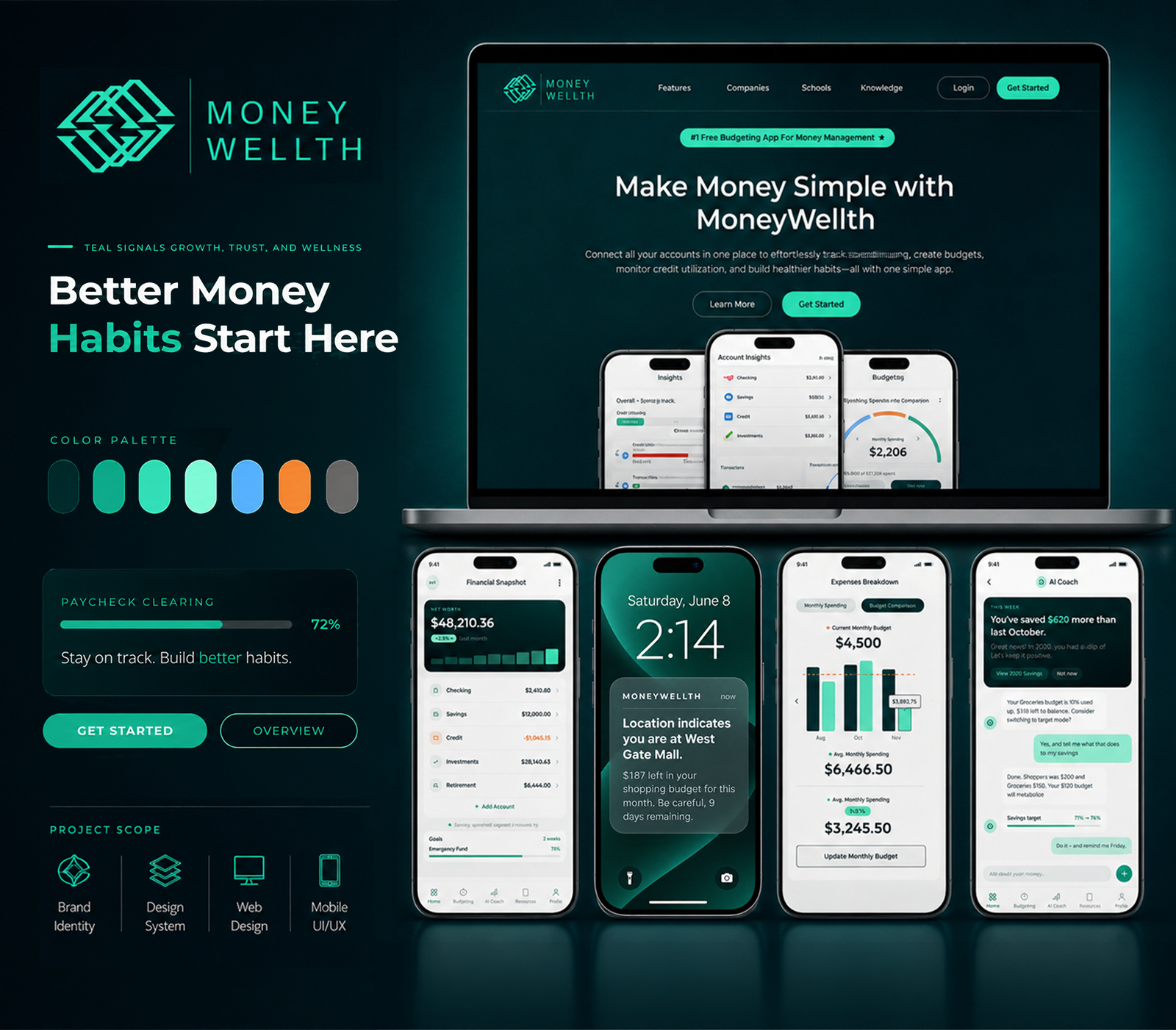
Positioning, brand identity, in-product voice, UX/UI direction, the acquisition surface, and the roadmap. At MoneyWellth I made the case to our CEO that product-led growth only works when marketing and product operate as one team, then ran both. In practice that means I own the number, the message, the experience that has to deliver it, and the team that ships all three.
What results has he actually delivered?
At MoneyWellth: $250K to $17.4M ARR, 137K paid users, and blended CAC down 61% to $14. At Amazon I took Handmade from $0 to $451M across eight markets. At KPMG I grew a new advisory practice from 3 consultants to 55 in 18 months. Across my career: $700M+ in new revenue generated and $78M in marketing spend directed.
Is he a brand marketer or a performance marketer?
Both, and I do not think the split survives contact with a real P&L. Brand logic has to survive a test and tests have to respect the brand, so I hold creative direction and the media math in the same seat. The practical proof is that I have drawn identity systems and app screens myself and also run the incrementality tests that decide where spend goes.
Can one leader really own both product and marketing without one of them suffering?
Yes, and separating them is what causes the suffering. Split, marketing sells a promise the product has not shipped and product ships features nobody asked for. Merged, every roadmap decision is traced to demand data — search and paid queries, sales objections, support tickets, onboarding drop-off — and the brand is built inside the product rather than layered on top of it.
What does “AI-native growth” mean in practice, and what is it not?
It is not a copilot subscription or a pilot project. AI did not replace my team; it transformed the depth and breadth each person can own, so I redrew every scope around what one person armed with frontier models and their Claude agents can actually accomplish. Product managers ship into staging with engineers reviewing and releasing; growth marketers design and build their own creative, stand up dozens of dynamic landing pages against high-intent keywords, and run the paid campaigns behind them.
How do you use AI agents without losing brand quality or brand safety?
Agents own production inside the loop; people keep judgment and the kill criteria. Every output ships against a written system — semantic color, assigned type roles, and an in-product voice rule — so quality is a specification rather than a matter of taste. I approve anything that ships with the mark on it, and nothing goes live because a model produced it faster.
How do you think about CAC, LTV, and incrementality?
Cheap customers are easy to buy, so CAC never gets read without LTV next to it. I hold self-serve conversion, activation to a connected account, retention past ninety days, and support volume as the operating set — a design that needs explaining shows up as tickets. Channel decisions come from incrementality tests rather than a shared attribution model, because platform-reported conversions will happily sell you credit for demand you already had.
What stage and size of company is he the right hire for?
Companies between early traction and real scale — roughly $1M to $50M ARR — that need brand, product, and growth to move as one system and cannot afford three separate leaders to do it. I am the right hire when the mandate is to build the engine and the team. I am the wrong hire for a maintenance role on an established brand where the job is to protect what exists rather than build what is next.
Does he only work in fintech?
No. The work spans fintech and financial wellness at MoneyWellth, consumer products at New Ocean Ventures, marketplace and e-commerce at Amazon, enterprise B2B advisory at KPMG, and gaming at Microsoft — across consumer, B2B, and B2B2C motions. What transfers is the method: find the demand, prove the channel, build the system that compounds.
Is he available for full-time roles, or consulting and advisory work?
I am open to conversations about senior full-time leadership, and to selective advisory or fractional engagements where the problem is a growth engine that needs building rather than a report that needs writing. The fastest way to start is to tell me what you are trying to grow and what is currently in the way.
Building something awesome? Let’s chat.
My door is always open to builders, leaders, and founders. If you’re building something special, let’s have a conversation.